Office Hour By appointment
Office Room 404, 19 W. 4th St.
Ph.D. candidate in political science at the Wilf Family Department of Politics, New York University.
I study authoritarian politics, civil conflict, and rebel movements, focusing on elite networks, factional politics, and rebel governance. My work combines text-as-data methods, social network analysis, and original archival data.
Prior to joining NYU, I earned an M.A. in Analytical Political Economy from Duke University, alongside a Bachelor of Economics, with a major in Finance, from the Central University of Finance and Economics in Beijing, China.
Revolutionaries often mobilize marginalized groups with the promise of liberation and empowerment, yet frequently fail to deliver it. Why does mobilization fail to produce durable political inclusion for marginalized groups? This paper argues that mobilization can expand participation while simultaneously entrenching barriers to political authority, a process I term "segregated incorporation." Using an original county-month panel on local women's liberation associations during the Chinese Communist revolution alongside a difference-in-differences design of intertemporal treatment, I examine whether these organizations served as pathways to political inclusion or as extractive mechanisms that channeled local human capital into the war effort rather than elite political careers. Counties with women's organizations experienced significantly higher soldier casualties but subsequently produced fewer female revolutionary elites, suggesting that the CCP's gender programs mobilized women for war without translating that participation into formal political power. This divergence between mobilization and empowerment reveals a fundamental dilemma of revolution: institutions that incorporate marginalized groups through specialized roles can also fixate preexisting social norms, ultimately isolating them from the organizational pathways through which political authority is later distributed.
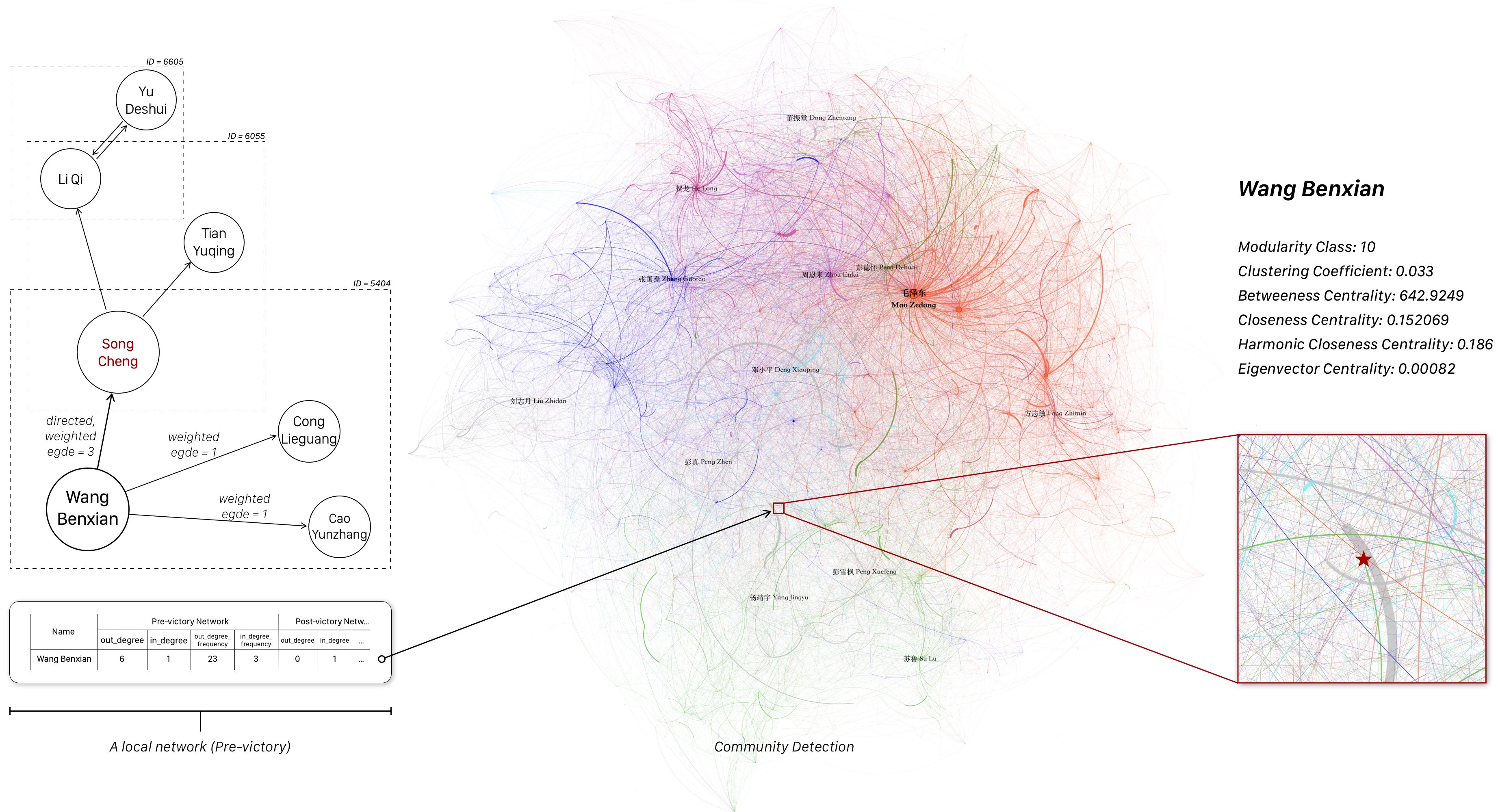
How do rebel organizations transform wartime networks into post-victory ruling hierarchies? Existing accounts of rebel victory and postwar state-building emphasize ideology, battlefield performance, and formal rank, but pay less attention to the relational foundations of elite incorporation. We argue that wartime social capital becomes a politically valuable asset after victory, but only when it survives the transition from insurgency to regime formation. Using MuLTI, a multi-indicator latent tie inference framework, we estimate positive, negative, and residual wartime ties among 7,798 Chinese Communist ex-rebels. We distinguish between remaining social capital, ties to militants who survived until the founding of the People's Republic of China, and lost social capital, ties to militants who died before victory. The results show that remaining social capital consistently increases the likelihood of attaining central, provincial, or senior military positions. Conversely, lost social capital has a consistent negative impact on postwar elite incorporation outcomes. Key mechanism suggests that this penalty reflects not only the disconnection of individual contacts but also a severe community-level shock: deaths within close-knit, in-group networks weaken the local network infrastructure through which endorsement, information, and sponsorship flow, actively depressing the political utility of am ex-rebel's surviving ties. The findings show that revolutionary victory does not simply reward wartime service; it converts surviving relational capital into state power while leaving those embedded in shattered wartime communities at a disadvantage.
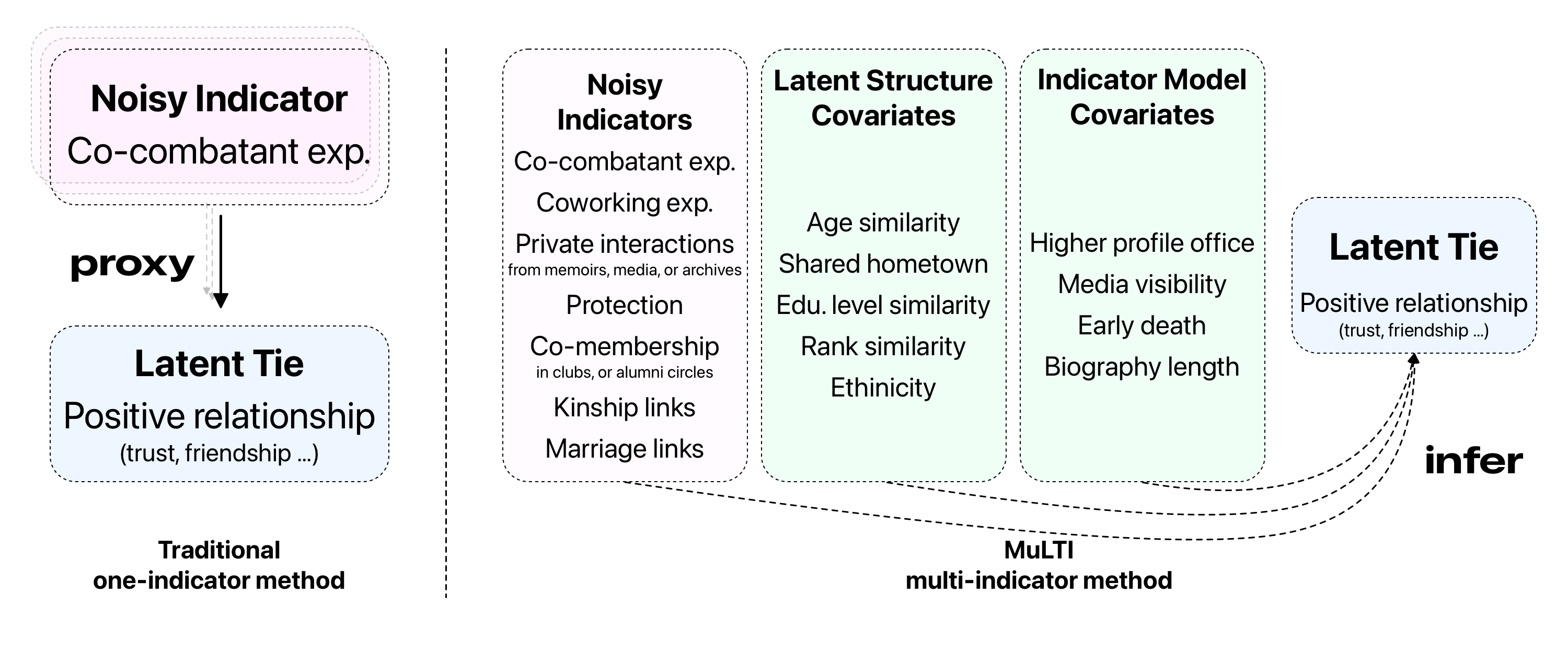
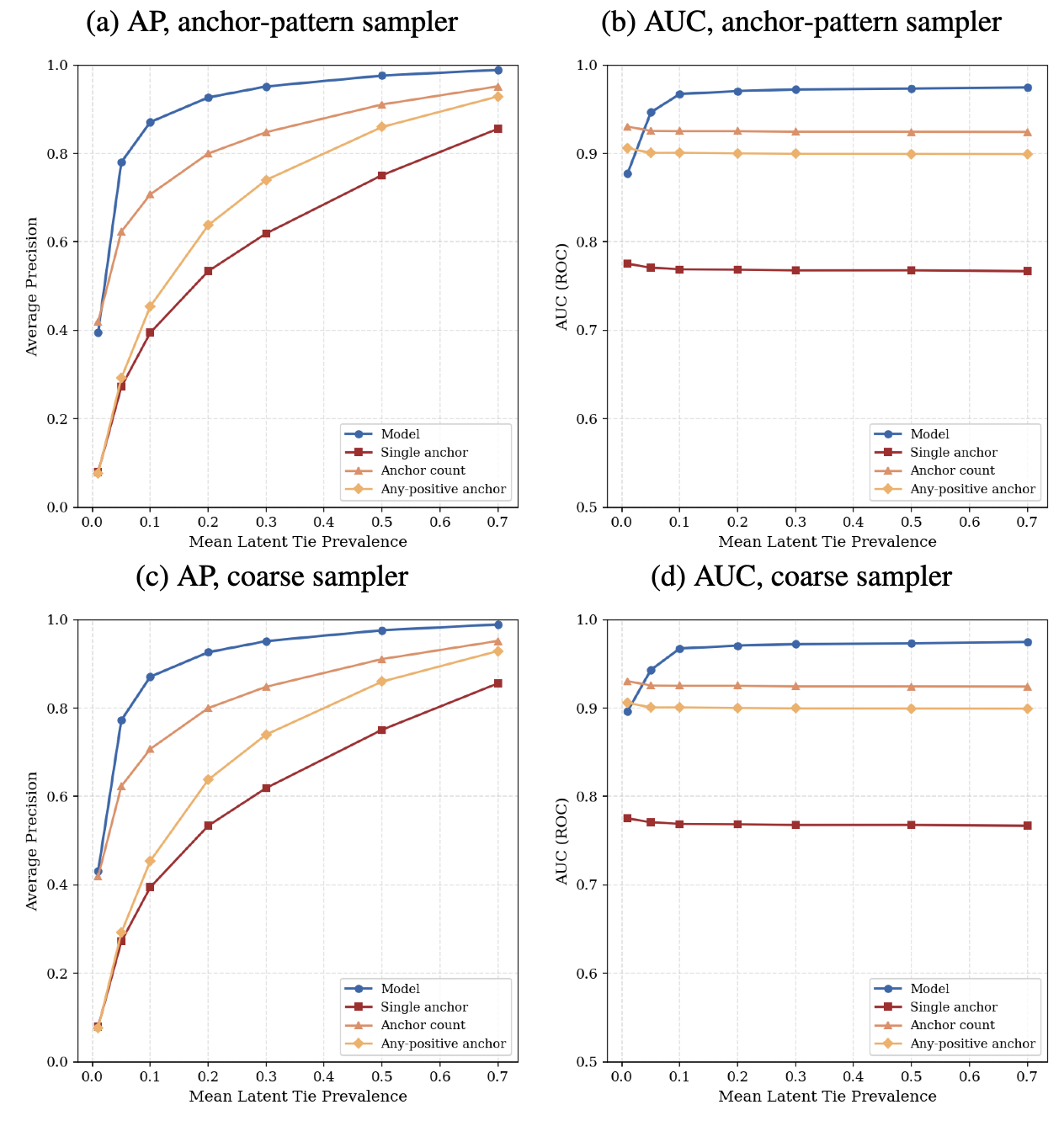
Political scientists often rely on proxy networks to study relational political processes, yet theoretically important relationships such as patronage, trust, and antagonism are often latent and multiplex. Existing approaches risk conflating the target latent relationship with its proxies and introducing non-classical measurement errors. We propose MuLTI (Multi-indicator Latent Tie Inference), a framework that recovers latent ties from rich but noisy observational data by combining relational traces, dyadic characteristics, and features of the documentation process. We establish nonparametric identification using conditionally independent, tie-specific anchors, and estimate the model by maximum likelihood with stratified stochastic optimization. Simulations show that MuLTI consistently outperforms proxy-based benchmarks, with the largest gains when indicators are noisy and multiple indicators are available. We apply the framework to biographical records of revolutionary elites from the Chinese Communist Revolution, estimating positive and negative tie probabilities from twelve extracted observational traces. The application shows that MuLTI recovers nuanced, multidimensional relationships that conventional binary codings would miss.
Leaders often purge ruling elites to consolidate power, yet we know surprisingly little about how they carry out these perilous purges. We argue that fragmentation within the ruling coalition creates opportunities for purges. Specifically, leaders can ally with less threatening factions to purge more threatening rivals, then reward these allies with high-ranking positions while checking their power by embedding loyalists alongside them. We test this argument using an original dataset tracing the careers of more than 1,200 officers in the Communist Red Army during the First Chinese Civil War (1927–1936). We show that purge intensity was greater where factions were more evenly balanced in strength. Moreover, officers from factions holding a disproportionately large share of senior posts were more likely to be purged. By contrast, officers from factions holding fewer senior posts relative to their strength were more likely to be promoted to commanding positions after purges, while nonaligned officers with more politically reliable backgrounds were more likely to be appointed as political commissars to monitor them. These findings shed light on the power dynamics underlying purges and political violence in autocracies.
This dissertation proposes an integrated, micro-founded account of rebel governance and politics centered on how organizations manage cohesion under growth, loyalty under risk, and resources under scarcity. The core claim is that rebel leaders navigate a moving frontier between capability and loyalty by reconfiguring social ties and role structures: who works with whom, on what tasks, and under which monitoring and incentive systems. These adjustments are observable in personnel flows, network positions, purges, and the often-overlooked “soft tissue” of organizations: logistics, propaganda, and neighborhood-based supply and information circuits. By tracing these micro-level features across war and peace, the project links the study of insurgent cohesion and elite control to the study of state formation after victory.
Empirically, the dissertation is grounded in fine-grained historical data from the Chinese Communist Party's (CCP) revolutionary period, particularly the Red Army during the first Chinese Civil War (1927-1936) and post-victory period (1949-). It draws on (1) a novel, original, large-N biographical dataset of thousands of militants, Historical Biographical Database of the People's Liberation Army (HBDPLA); (2) organizational archives detailing command structures and appointments; and (3) locality-level records on recruitment, political work, and fatalities. These sources make it possible to reconstruct directed wartime social networks, measure factional boundaries and their evolution, track personnel selection and sanctioning over time, and link local civilian mobilization to unit-level performance and discipline. The payoff is an unusually transparent view into the intra-organizational processes that theories of rebellion and authoritarian politics often invoke but rarely observe directly.
Office Hour By appointment
Office Room 404, 19 W. 4th St.
Current Version: September 2026